WHITE RABBIT LABS

FOR RESEARCH PURPOSES ONLY · Not for human or animal consumption

Explore White Rabbit

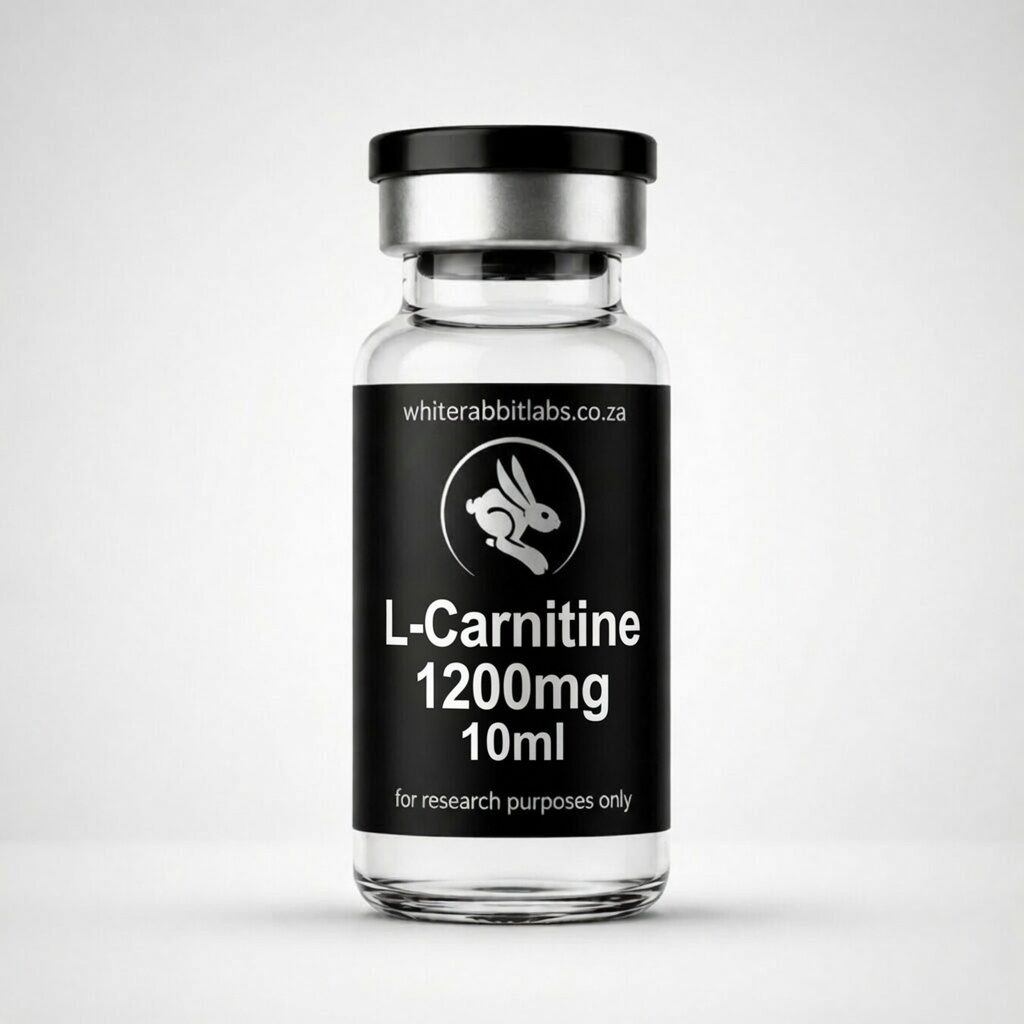
L-Carnitine 1200mg/ml

15 in stock

R1 250,00

15 in stock

Description

L-Carnitine 1200mg is supplied by White Rabbit Labs for controlled laboratory research involving fatty acid transport, mitochondrial function, cellular energy metabolism, and metabolic pathway studies.

L-Carnitine is a naturally occurring amino acid derivative involved in the transport of long-chain fatty acids into mitochondria, where they can be used in cellular energy production through beta-oxidation. In research settings, this makes L-Carnitine relevant for studies focused on mitochondrial bioenergetics, lipid metabolism, fatty acid oxidation, and energy pathway regulation.

Because of its role in fatty acid transport and mitochondrial metabolism, L-Carnitine is commonly referenced in laboratory research connected to cellular energy balance, metabolic function, exercise physiology models, and tissue-specific energy demand. It may also be useful in research exploring how cells manage energy substrates under controlled experimental conditions.

L-Carnitine may be suitable for laboratories studying lipid utilisation, mitochondrial pathway activity, beta-oxidation models, metabolic stress-response pathways, and cellular energy regulation. These research areas are provided for scientific context only and must not be understood as fat-loss, performance, recovery, wellness, organ-health, or treatment claims.

This product is supplied for qualified research use only and should be handled according to appropriate laboratory procedures, safety standards, and validated research protocols.

Research Context

L-Carnitine may be relevant in laboratory studies focused on:

  • Fatty acid transport research
  • Mitochondrial function studies
  • Cellular energy metabolism
  • Beta-oxidation pathway models
  • Lipid metabolism research
  • Metabolic stress-response models
  • Exercise physiology research models
  • Muscle cell energy pathway studies
  • Bioenergetics and ATP-related research
  • Tissue-specific energy demand models
  • Metabolic pathway regulation

These research areas are provided for scientific context only and must not be understood as weight-loss, fat-burning, exercise performance, recovery, heart health, kidney health, lung health, wellness, or medical benefit claims.

Important Notice

This product is supplied strictly for laboratory research purposes only. It is not intended for human or animal consumption, injection, topical use, medical treatment, weight management, fat loss, sports performance, recovery support, organ-health support, diagnostic use, or any form of personal use.

White Rabbit Labs does not provide dosing, administration, application, treatment, or personal-use guidance. Buyers are responsible for ensuring that this material is handled only in a suitable research environment and in line with applicable laws, safety standards, and internal laboratory procedures.
What It Is

L-Carnitine is a naturally occurring compound that helps transport long-chain fatty acids into mitochondria for energy production (fat burning). It’s commonly supplemented for exercise recovery, reduced muscle soreness, and fat metabolism. Your body makes some from lysine and methionine, and you get more from red meat.

How It Works

Think of injectable L-carnitine as a “fat-shuttle turbocharger.” It helps your cells turn stored fat into usable energy, especially when natural levels are low.

How it works:

• Binds fatty acids and carries them across the mitochondrial membrane.
• Inside the mitochondria, the fats are burned for ATP (energy) via beta-oxidation.
• Clears toxic acyl groups that build up when carnitine is deficient.

Observed Benefits

• Treats carnitine deficiency — rapidly restores energy production in genetic disorders or dialysis patients (FDA-approved).
• Supports kidney patients on dialysis — prevents and treats deficiency caused by dialysis removing carnitine.
• Potential heart & metabolic support — some studies show modest benefits for heart failure symptoms or exercise tolerance, but results are inconsistent.
• Bonus signals: explored for fatigue in cancer or septic shock (small trials), but not proven or approved.

Possible Side Effects

Injectable L-carnitine is generally well-tolerated when given properly under medical supervision.
Most side effects are mild and transient.

Common/mild:
• Nausea, vomiting, abdominal cramps, or diarrhea.
• “Fishy” body odor (especially at higher doses).

Less common:
• Injection/infusion-site reactions, headache, or dizziness.

Bottom line: Safer than many supplements when prescribed; side effects are usually mild and reversible.

Reconstitution, Dosage and Cycling (Research Only)

Dosing is precise and based on FDA-approved guidelines (body weight or lab results).

Typical dose:

  • For carnitine deficiency: 50 mg/kg body weight per day (max ~3 g/day), divided or as continuous infusion.
  • Off-label research (not recommended): 500mg vial/1ml. Inject 1ml per day as a minimum. Subcutaneous or Intramuscular for higher doses.

Cycling:

  • Approved uses: Ongoing as needed. Research: 8 weeks on/2 weeks off.
Fun Facts
  • Fat-shuttle superstar — without it, long-chain fats couldn’t enter mitochondria to be burned for energy (your body’s “taxi service” for fat).
  • Dialysis lifesaver — dialysis washes out natural carnitine, so IV replacement is standard for many kidney patients.
  • Orphan drug status — FDA granted it special designation for rare metabolic disorders.
  • Not for dieting — despite hype, it doesn’t magically melt fat without diet/exercise; the FDA explicitly warns against weight-loss claims.
  • Fishy side effect — high doses can cause a temporary “fishy” body odor (trimethylamine buildup).
  • Mitochondrial essential — every cell needs it, but heart and muscle cells rely on it the most.
  • IV vs oral — injectable form bypasses gut for faster, more reliable delivery in deficiency cases.
Citations and Sources

L-carnitine injectable has solid data for approved deficiency uses; off-label research is mixed and limited.
1. Mayo Clinic monograph (updated Jan 2026): FDA-approved for carnitine deficiency; IV dosing 50 mg/kg/day; prevents/treats issues in dialysis and genetic disorders.
2. FDA label for Carnitor Injection (updated references 2026): Prevention/treatment of carnitine deficiency in ESRD/dialysis; 50 mg/kg/day IV max.
3. Song et al. (2017 PMC meta-analysis, referenced 2026): L-carnitine (including IV) improves symptoms and cardiac function in heart failure; modest benefits.
4. Puskarich et al. (2013 PMC RCT): IV L-carnitine safe in septic shock; preliminary efficacy signals for vasopressor-dependent cases.
5. ClinicalTrials.gov heart failure study (referenced 2026): Evaluated IV L-carnitine for efficacy/safety in Chinese heart failure patients.
6. Fukami et al. (2014): Switching to IV L-carnitine improved lipid metabolism in hemodialysis patients.
7. Healio levocarnitine guide (2026): IV form for deficiency; side effects include nausea/vomiting; monitored in clinical settings.

Takeaway: Strong evidence for approved deficiency uses; off-label applications (heart failure, fatigue) show mixed or preliminary results only.

Our Take

We highly regard L-Carnitine for research purposes, and that’s why we provide it. It is an essential supplement to a healthy lifestyle and one of our “lifers”.

Disclaimer

Important disclaimer upfront: Injectable L-carnitine IS fully FDA-approved for the prevention and treatment of carnitine deficiency in patients with inborn errors of metabolism or end-stage renal disease (ESRD) on dialysis. It is NOT approved for weight loss, athletic performance, anti-aging, heart failure, fatigue, or general energy boosting — those uses are off-label and not supported by strong evidence. It requires a prescription and medical supervision (often in hospitals or dialysis clinics). Always talk to a doctor — this is not medical advice.