Description
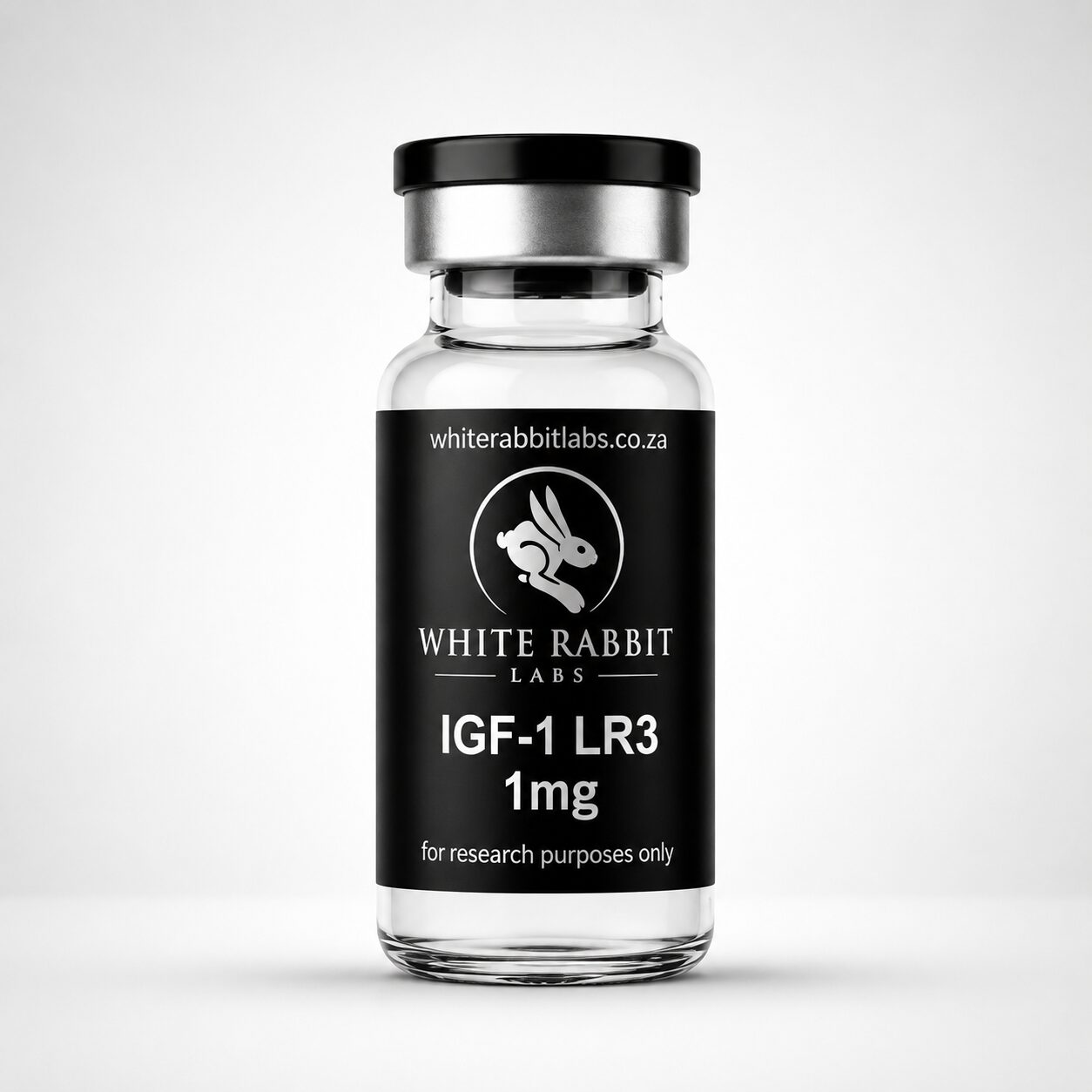
IGF-1 LR3 1mg, also known as Long R3 IGF-1, is a synthetic analogue of Insulin-Like Growth Factor-1, IGF-1.
It is mainly studied in non-clinical research involving growth-factor signalling, cellular repair, muscle-cell models, tissue-regeneration pathways, recovery research, body-composition models and ageing-related biological pathways.
IGF-1 LR3 is designed with structural modifications that make it different from native IGF-1. These changes are commonly reviewed in research for their effect on receptor interaction, binding behaviour and extended activity within controlled laboratory models.
This product is supplied strictly for qualified laboratory research use only and is not positioned as a medicine, supplement, muscle-growth product, anti-ageing product, recovery aid, sleep aid, wellness product or performance enhancer.
How It Works
IGF-1 LR3 is studied for its interaction with the IGF-1 receptor, a pathway involved in growth signalling, cellular repair and tissue-response research.
In research models, IGF-1 receptor activation is commonly associated with protein synthesis pathways, cellular growth behaviour, repair signalling and metabolic-response models.
IGF-1 LR3 is also studied for its reduced binding to IGF-binding proteins when compared with native IGF-1. This makes it a useful research tool for exploring longer-acting IGF-related activity in controlled non-clinical studies.
In simple terms, IGF-1 LR3 is researched for how IGF-1 signalling may influence cell growth, repair, recovery and body-composition-related pathways within laboratory environments.
Observed Benefits
Research interest in IGF-1 LR3 1mg includes:
- IGF-1 receptor activity research.
- Growth-factor signalling studies.
- Muscle-cell growth pathway models.
- Hyperplasia-related research models.
- Tissue repair and recovery pathway research.
- Joint and connective-tissue signalling studies.
- Body-composition research models.
- Ageing-related cellular pathway research.
- Sleep and recovery-related research contexts.
- Non-clinical metabolic and growth-signalling studies.
These references are provided for research context only and must not be understood as human benefit claims.
Possible Side Effects
IGF-1 LR3 1mg is supplied strictly for laboratory research purposes only and is not intended for human or animal use.
Because this product is not intended for consumption, injection, topical use or any form of in vivo use, human side-effect claims are not applicable to this product listing.
Possible research-related concerns include:
- Glucose-response changes in applicable research models.
- Cell-growth pathway effects depending on the model.
- Unknown outcomes outside controlled laboratory environments.
- No approved medical-use profile.
- No approved muscle-growth, anti-ageing, recovery, sleep or performance-use profile.
- Improper handling may create laboratory safety risks.
Bottom line: IGF-1 LR3 remains an investigational research material and must be handled only within suitable laboratory conditions.
Reconstitution, Dosage and Cycling, Research Only
White Rabbit Labs does not provide dosing, usage, administration, application, injection, topical-use or reconstitution guidance for IGF-1 LR3 1mg.
There are no approved human or animal dosing guidelines for this product.
This product is supplied strictly for qualified laboratory research use only. Buyers are responsible for ensuring that the material is handled in a suitable research environment and in line with applicable laws, safety standards and internal laboratory procedures.
Not for human or animal consumption. Not for injection. Not for topical use. Not for medical treatment. Not for muscle growth. Not for anti-ageing use. Not for recovery use. Not for sleep enhancement. Not for performance enhancement. Not for any form of in vivo use.
Fun Facts
- IGF-1 LR3 is a modified version of native IGF-1.
- “LR3” refers to Long R3, a structural modification used in research contexts.
- IGF-1 is closely linked to growth-factor signalling and cellular repair research.
- IGF-1 LR3 is often studied because of its reduced binding to IGF-binding proteins.
- Its main research relevance is in controlled studies involving growth signalling, muscle-cell models, recovery pathways and body-composition research.
Citations and Sources
Most available IGF-1 LR3 research is connected to growth-factor signalling, IGF-1 receptor activity, cellular growth models and tissue-repair pathway studies.
Key research areas include:
- IGF-1 receptor pathway research.
- Growth-factor signalling studies.
- Muscle-cell and hyperplasia-related models.
- Tissue repair and recovery pathway research.
- Body-composition and metabolic-response models.
- Ageing-related cellular pathway studies.
- IGF-binding protein interaction research.
Takeaway: IGF-1 LR3 1mg is relevant for advanced laboratory research involving IGF-1 signalling, growth-factor pathways and cellular repair models, but it must not be interpreted as a medicine, supplement, muscle-growth product, anti-ageing product, sleep aid, recovery aid or performance enhancer.
Our Take
IGF-1 LR3 1mg is a strong research peptide for laboratories studying growth-factor signalling, IGF-1 receptor activity, cellular repair and body-composition-related pathways.
Its relevance lies in controlled research environments where scientists are exploring muscle-cell models, recovery signalling, tissue repair and ageing-related pathways.
Promising as a laboratory research material, but strictly non-clinical and not for any form of human or animal use.
Disclaimer
Important disclaimer upfront: IGF-1 LR3 1mg is not approved by SAHPRA, the FDA, or any major regulatory authority for medical, muscle-growth, anti-ageing, sleep, recovery, wellness or performance use.
This product is supplied strictly for laboratory research purposes only. It is not intended for human or animal consumption, injection, topical use, medical treatment, muscle growth, anti-ageing use, sleep enhancement, recovery use, diagnosis, prevention, cure or performance enhancement.
White Rabbit Labs does not provide dosing, usage, administration, application or reconstitution guidance. Buyers are responsible for ensuring that this material is handled only within a suitable research environment and in line with applicable laws, safety standards and internal laboratory procedures.