What It Is
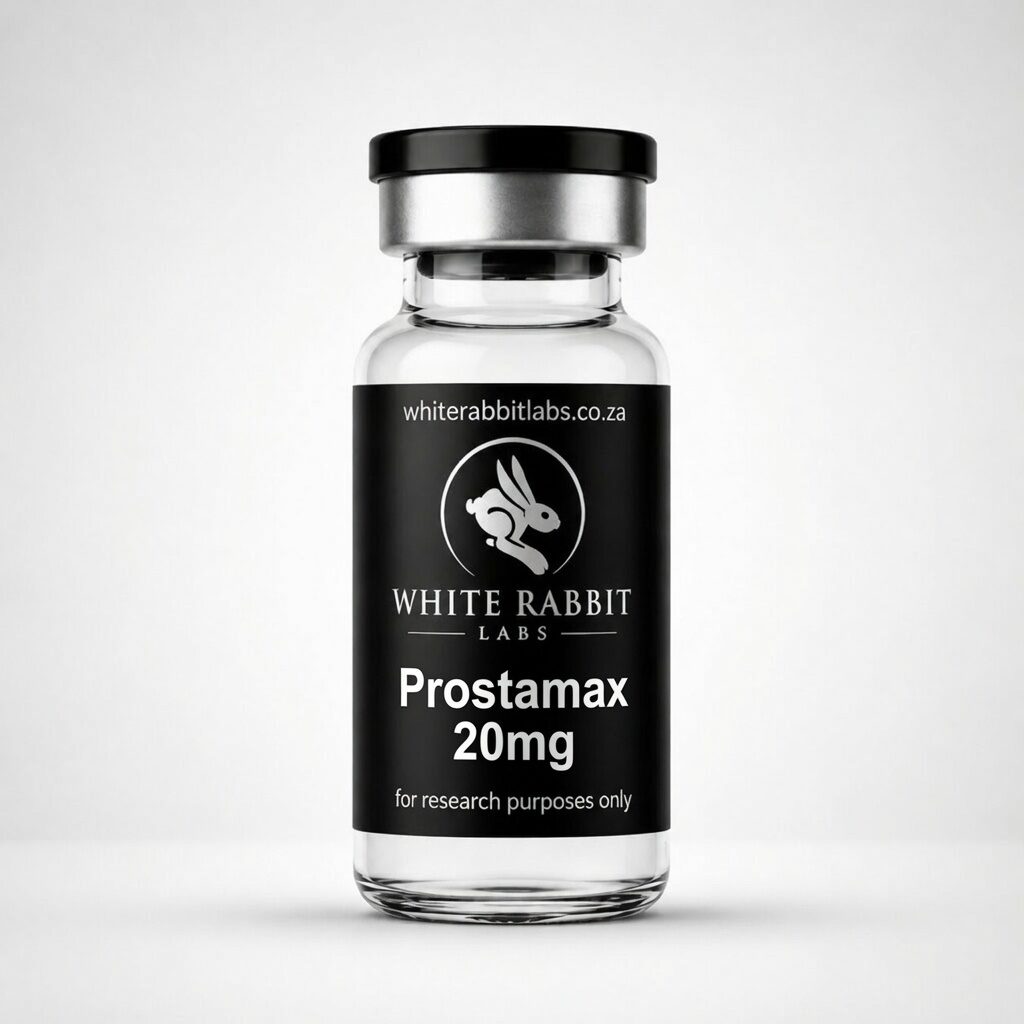
Prostamax is a lab-made synthetic tetrapeptide — a tiny chain of just 4 amino acids (lysine-glutamic acid-aspartic acid-proline) designed as a prostate-specific bioregulator. Developed by Professor Vladimir Khavinson’s team in Russia as part of the Cytogen series, it’s a purified peptide that selectively targets prostate tissue to normalize function, reduce inflammation, and support healthy cell activity.
How It Works
Think of Prostamax as your prostate’s “cellular tune-up specialist.” It works at the gene level to restore balance and reduce inflammation without affecting hormones.
How it works:
Selectively binds DNA sequences in prostate cells.
• Modulates chromatin structure and gene expression for healthy cell proliferation, reduces excessive inflammation, and prevents fibrotic changes.
Observed Benefits
- Prostate health & BPH support — reduces inflammation, swelling, and urinary symptoms in chronic prostatitis and benign prostatic hyperplasia.
- Anti-inflammatory & tissue repair — calms prostate tissue, improves blood flow, and supports normal gland function.
- Anti-aging for prostate — counters age-related changes and helps maintain healthy prostate tissue long-term.
- Bonus signals: potential immune modulation and reduced risk of complications from chronic prostate issues.
In short: It helps the prostate heal and function better by targeting inflammation and cellular repair — especially useful for aging men or chronic prostate conditions.
Possible Side Effects
Prostamax has an excellent safety record in clinical use — decades of Russian data show it is extremely well-tolerated.
In studies and real-world observations: No serious adverse events or organ toxicity reported.
Mild/rare effects:
• Injection-site redness or mild irritation (resolves quickly).
• Occasional transient fatigue or digestive discomfort (very uncommon).
• Not for pregnancy/breastfeeding or without specialist advice in prostate cancer history.
Reconstitution, Dosage and Cycling (Research Only)
For Research Purposes Only.
Method of Administration: Subcutaneous into fatty tissue.
Reconstitution: 2ml Bac water into single vial. See Reconstitution Guide.
Dose: 2mg daily, therefore 20 units or 0.2ml. Use peptide calculator (link) for alternative dosage.
Course: 20 days.
Cycling: Repeat every 3 months for maintenance or as needed (e.g., during respiratory seasons or after illness).
Tip: Reconstitute with bacteriostatic water; store in fridge. Use insulin syringes and sterile technique.
Fun Facts
• Prostate-specific minimalist — only 4 amino acids (KEDP), yet it precisely targets prostate cells like Cardiogen does for the heart.
• Thymic connection — derived from research on thymic peptides but specialized for the prostate gland.
• Inflammation fighter — in animal models it reduced swelling, vascular congestion, and prevented fibrotic changes in the prostate.
• Russian clinical staple — used for decades in protocols for chronic prostatitis and BPH.
• DNA-level tuner — modulates chromatin structure to reactivate healthy gene expression in prostate tissue.
• Non-hormonal — works without altering testosterone or other hormones — a big advantage for men concerned about side effects.
• Khavinson Cytogen series — part of the tissue-specific line that includes Cardiogen (heart) and Vesilute (bladder).
Citations and Sources
Human data is strongest from Russian clinical practice; animal models show inflammation reduction and tissue repair.
- Jay Campbell Prostamax guide (Aug 2025): KEDP sequence; reduces prostate inflammation, repairs cellular damage, supports urinary function and prostate health.
2. Lotilabs Prostamax research guide (Jun 2025): Synthetic Khavinson peptide (Lys-Glu-Asp-Pro); targets prostate cells, reduces inflammatory damage, DNA regulation for cell longevity.
4. Scale Regenerative Health (2026): Supports prostate health, reduces inflammation, improves urinary function; non-hormonal bioregulator.
5. Hunters Health Hacks (referenced 2026): Rodent model study — reduced chronic prostate inflammation, swelling, vascular congestion, and fibrosis.
6. NBInno scientific article (May 2025): Modulates inflammatory cytokines, promotes anti-inflammatory responses in prostate tissue; immune support.
7. BioLongevity Labs research (Dec 2025): Changes chromatin structure and gene expression in prostate tissue; part of Khavinson family.
8. Peptide Effect / Paragon Sports Medicine (2026): Excellent safety; no significant side effects in multi-year data.
9. Experimental study (Scirp, referenced 2026): Efficiency in chronic aseptic prostatitis — reduces signs of inflammation and prevents complications.
10. The Peptide List regulatory summary (2026): Research chemical in US; prostate-specific bioregulator with strong Russian clinical backing.
Takeaway: Strong mechanistic and clinical signals for prostate inflammation and function in approved regions; Western data supportive but needs larger independent trials.
Our Take
Prostamax is a targeted prostate bioregulator with real clinical history where available — especially valuable for men dealing with inflammation or age-related prostate issues. Combine with other bioregulators for added value.
Disclaimer
Important disclaimer upfront: Prostamax is NOT approved by the FDA (or any major Western agency) as of 2026. It remains strictly investigational/research chemical in the US (compounded versions face restrictions under current peptide rules). It is approved and used clinically in Russia for prostatitis and related conditions. Long-term safety data in healthy Western populations is limited. It is banned by WADA. Always talk to a doctor — this is not medical advice.