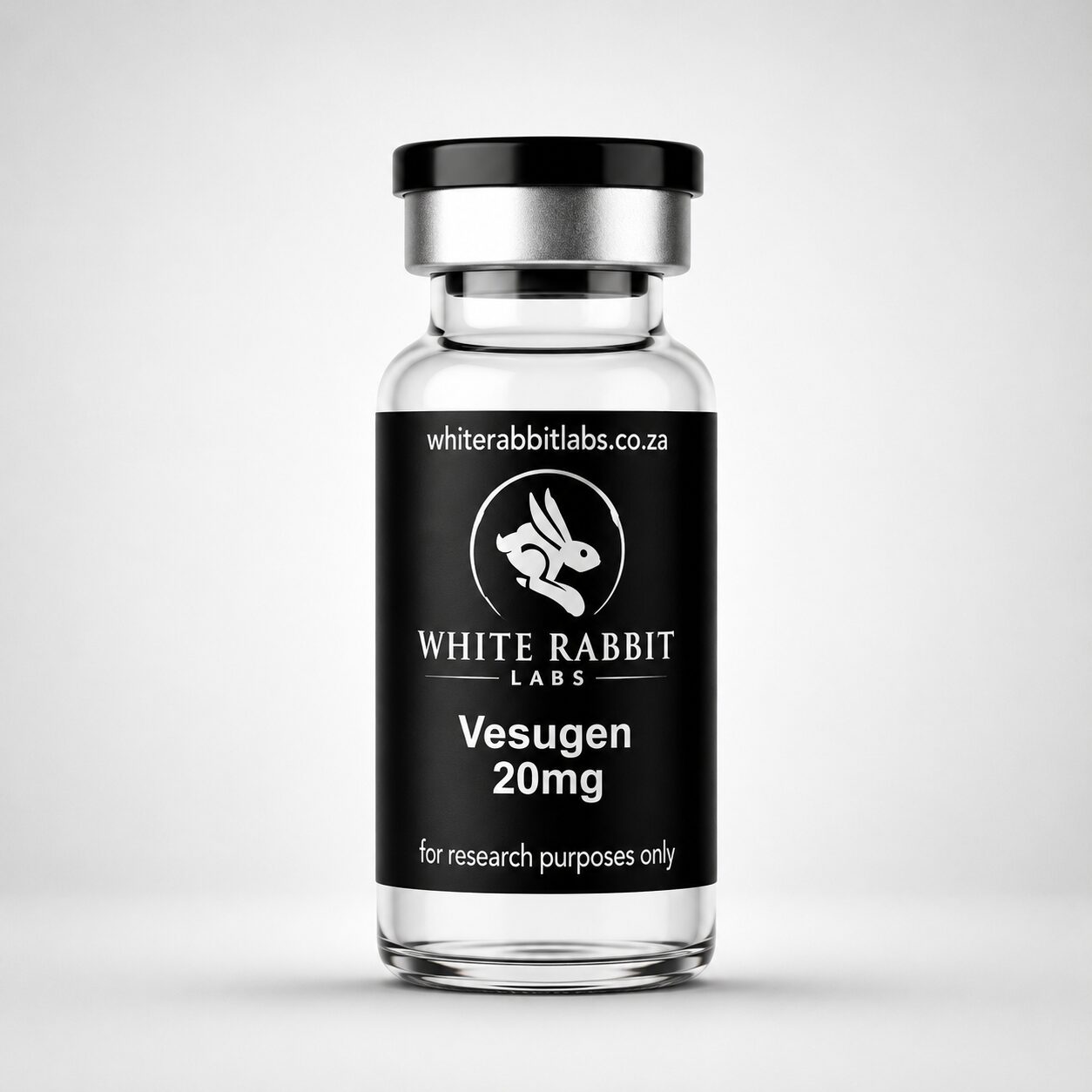
Description
Vesugen 20mg is a laboratory research peptide commonly associated with vascular and cardiovascular bioregulator peptide studies.
It is mainly reviewed in non-clinical research involving blood vessel tissue models, endothelial-cell signalling, cardiovascular pathway research, oxidative-stress response, vascular ageing and tissue-specific peptide activity.
Vesugen is of particular interest because researchers are exploring its role in vascular cell behaviour, cellular repair signalling, antioxidant-response models and age-related cardiovascular pathway studies.
This product is supplied strictly for qualified laboratory research use only and is not positioned as a medicine, supplement, cardiovascular product, heart-health product, anti-ageing product, antioxidant product, wellness product or performance aid.
How It Works
Vesugen is studied for its potential interaction with vascular tissue and endothelial-cell signalling pathways.
In research models, vascular bioregulator peptides are often reviewed for their possible role in gene-expression activity, tissue-specific signalling, cellular repair pathways and oxidative-stress response.
Endothelial cells play an important role in vascular function, blood vessel behaviour and cardiovascular pathway research.
In simple terms, Vesugen 20mg is researched for how vascular and cardiovascular cells may respond to short peptide signalling within controlled, non-clinical laboratory environments.
Observed Benefits
Research interest in Vesugen 20mg includes:
- Cardiovascular pathway research.
- Vascular tissue-response models.
- Endothelial-cell signalling studies.
- Oxidative-stress response research.
- Antioxidant pathway models.
- Blood vessel ageing research.
- Tissue-specific bioregulator peptide studies.
- Cellular repair and vascular recovery pathway research.
- Non-clinical heart and vascular health models.
These references are provided for research context only and must not be understood as human benefit claims.
Possible Side Effects
Vesugen 20mg is supplied strictly for laboratory research purposes only and is not intended for human or animal use.
Because this product is not intended for consumption, injection, topical use or any form of in vivo use, human side-effect claims are not applicable to this product listing.
Possible research-related concerns include:
- Limited published human safety data in this product context.
- Unknown outcomes outside controlled laboratory environments.
- Vascular pathway effects depending on the study model.
- No approved medical-use profile.
- No approved cardiovascular, heart-health, antioxidant, anti-ageing or wellness-use profile.
- Improper handling may create laboratory safety risks.
Bottom line: Vesugen 20mg remains an investigational research material and must be handled only within suitable laboratory conditions.
Reconstitution, Dosage and Cycling, Research Only
White Rabbit Labs does not provide dosing, usage, administration, application, injection, topical-use or reconstitution guidance for Vesugen 20mg.
There are no approved human or animal dosing guidelines for this product.
This product is supplied strictly for qualified laboratory research use only. Buyers are responsible for ensuring that the material is handled in a suitable research environment and in line with applicable laws, safety standards and internal laboratory procedures.
Not for human or animal consumption. Not for injection. Not for topical use. Not for medical treatment. Not for cardiovascular use. Not for heart-health use. Not for antioxidant use. Not for anti-ageing use. Not for performance enhancement. Not for any form of in vivo use.
Fun Facts
- Vesugen is commonly discussed as a vascular-focused bioregulator peptide.
- Bioregulator peptides are often studied for tissue-specific signalling behaviour.
- Vesugen is mainly associated with cardiovascular and endothelial-cell research.
- Vascular research often focuses on oxidative stress, ageing and cellular repair pathways.
- Its main research relevance is in controlled studies involving vascular tissue response and cardiovascular pathway signalling.
Citations and Sources
Most available Vesugen research is connected to vascular bioregulator peptide studies, endothelial-cell models, cardiovascular signalling and oxidative-stress pathway research.
Key research areas include:
- Vascular bioregulator peptide research.
- Endothelial-cell signalling studies.
- Cardiovascular pathway models.
- Oxidative-stress and antioxidant-response research.
- Vascular ageing and cellular repair studies.
- Tissue-specific peptide signalling research.
- Non-clinical heart and blood vessel pathway investigations.
Takeaway: Vesugen 20mg is relevant for laboratory research involving vascular tissue signalling, endothelial-cell response, oxidative stress and cardiovascular pathway models, but it must not be interpreted as a medicine, supplement, cardiovascular product, heart-health product, antioxidant product or anti-ageing aid.
Our Take
Vesugen 20mg is an interesting vascular-focused bioregulator peptide for laboratories studying cardiovascular pathways, endothelial-cell behaviour, oxidative stress and vascular ageing models.
Its relevance lies in controlled research environments where scientists are exploring tissue-specific peptide signalling and vascular cell response.
Promising as a laboratory research material, but strictly non-clinical and not for any form of human or animal use.
Disclaimer
Important disclaimer upfront: Vesugen 20mg is not approved by SAHPRA, the FDA, or any major regulatory authority for medical, cardiovascular, heart-health, antioxidant, anti-ageing, wellness or performance use.
This product is supplied strictly for laboratory research purposes only. It is not intended for human or animal consumption, injection, topical use, medical treatment, cardiovascular use, heart-health use, antioxidant use, anti-ageing use, diagnosis, prevention, cure or performance enhancement.
White Rabbit Labs does not provide dosing, usage, administration, application or reconstitution guidance. Buyers are responsible for ensuring that this material is handled only within a suitable research environment and in line with applicable laws, safety standards and internal laboratory procedures.