WHITE RABBIT LABS

FOR RESEARCH PURPOSES ONLY · Not for human or animal consumption

Explore White Rabbit

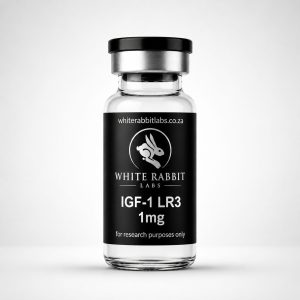
GHK-Cu 100mg

14 in stock

R550,00

14 in stock

Description

GHK-Cu is a synthetic copper-binding peptide commonly referenced in laboratory research involving cellular response, structural protein pathways, extracellular matrix signalling, and dermal-model investigation.

In research settings, GHK-Cu is often studied for its relationship with copper peptide activity, collagen-related pathway research, tissue-model signalling, and cellular behaviour within controlled, non-clinical environments.

This product may be relevant for researchers exploring how copper-binding peptides interact with selected cellular and structural pathways in laboratory-based models.

GHK-Cu is intended for qualified research use only and is not positioned as a medicine, supplement, cosmetic product, skin-care product, hair-growth product, anti-ageing product, recovery product, or wellness aid.

Research Context

GHK-Cu may be of interest in laboratory studies focused on:

  • Copper-binding peptide activity
  • Structural protein pathway research
  • Dermal-model studies
  • Extracellular matrix signalling
  • Cellular response pathways
  • Collagen-related research models
  • Tissue-model behaviour
  • Non-clinical peptide interaction studies

These references are provided for research context only and must not be understood as human benefit claims.

Important Notice

This product is supplied strictly for laboratory research purposes only. It is not intended for human or animal consumption, injection, topical use, cosmetic use, skin application, hair application, medical treatment, anti-ageing use, wound-care use, performance enhancement, or any form of in vivo use.

White Rabbit Labs does not provide dosing, usage, administration, application, cosmetic, reconstitution, or handling guidance beyond standard laboratory safety requirements. Buyers are responsible for ensuring that this material is handled only within a suitable research environment and in line with applicable laws, safety standards, and internal laboratory procedures.
What It Is

GHK-Cu (Glycyl-L-Histidyl-L-Lysine Copper, also known as Copper Tripeptide-1) is a naturally occurring or lab-made tripeptide complex - a tiny chain of just 3 amino acids (Gly-His-Lys) tightly bound to a copper ion. Discovered in 1973 by biochemist Dr. Loren Pickart while analyzing human plasma, it is found in blood, saliva, and urine (levels drop sharply with age). It acts as both a copper-delivery vehicle and a powerful signaling molecule that 'resets' cells toward repair and youthful function. Available as topical serums/creams (common in cosmetics) or injectable (research/clinic use).

How It Works

Think of GHK-Cu as your body's 'repair and reset button' - it carries copper to cells while flipping thousands of genes back toward a younger state.
How it works:
- Binds copper and delivers it exactly where needed for enzymes (e.g., collagen cross-linking).
- Modulates ~4,000 genes (up- or down-regulates repair, antioxidant, and anti-inflammatory pathways).
- Stimulates fibroblasts to produce collagen, elastin, and glycosaminoglycans; promotes new blood vessels (angiogenesis); calms inflammation and oxidative stress.

Observed Benefits

-Skin rejuvenation: reduces fine lines/wrinkles, increases firmness/thickness/density, improves clarity and elasticity.
-Wound healing & scar reduction: faster closure, better tissue quality, less inflammation (even post-laser or surgery).
-Hair growth: thicker strands, increased count (especially androgenetic alopecia support).
-Anti-aging & regeneration: antioxidant protection, reduced oxidative damage, possible lung/anti-cancer protective signals.
-Bonus: anti-inflammatory effects, improved skin barrier, and hints at broader tissue repair.
In short: It tells aging or damaged cells to behave like young, healthy ones - the original 'beauty peptide.'

Possible Side Effects

GHK-Cu has an outstanding safety record - decades of cosmetic use with almost no serious issues.
In clinical reviews and trials: Extremely well-tolerated.
Common/mild (mostly topical or early injectable):
- Temporary redness, itching, or irritation at application/injection site (usually resolves quickly).
Mild 'purging' (temporary breakouts as skin renews).
Rare/theoretical:
-Copper-related symptoms (nausea, metallic taste, fatigue) only if massively overdosed systemically.
-No reports of serious toxicity in proper use.
Bigger caveats:
- Injectable versions carry FDA-noted theoretical immunogenicity risk (why compounding is restricted).

Bottom line: One of the safest peptides/compounds we've covered, especially topically, but injectable use is still experimental.

Reconstitution, Dosage and Cycling (Research Only)

No official medical guidelines (injectable is experimental), but these are standard protocols from cosmetic use and clinic reports.

Reconstitute 3ml Bac water into vial. See Reconstitution Guide

Typical dose: 2mg per day. Therefore, draw 12 Units on 1ml syringe (0.12ml). That gives you 25 doses.

- Injectable (subcutaneous - belly or thigh): 2 mg per day or 2 mg 2-3x/week (some protocols 5 days on/2 off).- Start low and titrate; topical is easiest for beginners.

Cycling:

- Topical: Daily ongoing (safe for long-term cosmetic use).
- Injectable: 1-2 months 'on' -then 1-2 months off (3-6 cycles per year to prevent tolerance).
Tip: Apply topical at night (synergizes with skin repair). For injections, reconstitute powder with bacteriostatic water; store in fridge. Sterile technique essential.

Fun Facts
  • Youth signal in your blood - naturally high in young people; levels crash ~60% by age 60 - Pickart called it the body's 'repair alarm.'
  • Gene reset master - flips over 4,000 genes toward youthful expression - one of the broadest gene effects of any peptide.
  • Outperforms classics - in some head-to-head studies it beat vitamin C, retinoic acid, and Matrixyl for wrinkle reduction.
  •  Copper's perfect partner - the peptide escorts copper exactly where it's needed (no toxicity at normal doses).
  • Hair & skin legend - used in high-end serums since the 1990s; now exploding in 2026 'beauty peptide' trends.
  • Wound-healing pioneer - first shown to accelerate healing in rabbits; now studied for post-laser and surgical recovery.
  • Pickart's legacy - Dr. Loren Pickart (1938-2023) dedicated his life to it - over 50 years of research from one discovery.
Citations and Sources

Human data is strongest for topical skin use (decades of studies); injectable evidence is emerging/preclinical-heavy. Here are the key ones:
1. Innerbody Research (updated Jan 2026): Comprehensive 2026 review - skin benefits, hair growth, dosing, excellent safety profile.
2. Pickart et al. (2015) BioMed Research International (PMC): Landmark review - GHK-Cu as natural modulator of skin regeneration pathways; collagen boost and clinical anti-aging evidence.
3. Pickart et al. (2018) International Journal of Molecular Sciences (PMC): Gene data review - regenerative actions, wound healing, and protective effects.
4. NCT07437586 (ongoing Phase 2, 2026 update): Topical GHK-Cu gel for acute skin wound healing - evaluating faster re-epithelialization vs placebo.
5. 2023 double-blind split-face study (n=60): 0.05% GHK-Cu serum - 22% firmer skin, 16% fewer fine lines after 12 weeks.
6. 2024 multicenter laser-resurfacing study: 0.05% GHK-Cu gel - 25% faster healing, 30% lower inflammatory markers.
7. 2025 Japanese hair trial (0.02% lotion): 7% increase in hair count after 16 weeks.
8. Empire Medical Training review (Jan 2026): Clinical aesthetics applications — firmness, wrinkle reduction, post-procedure healing.
9. Pulse & Remedy clinical summary (2025): 20–30% skin firmness gains; collagen increase up to 70% in lab models.
10. FDA Bulk Substances List (2026): Notes Category 2 status for injectable GHK-Cu due to potential immunogenicity risks.

Takeaway: Decades of solid topical data + gene-level science; injectable human trials still limited but promising.

Our Take

GHK-Cu stands out as the most 'real-world' and accessible of the peptides ever covered - especially topically for skin and hair, while injectable versions add regenerative depth (often stacked with BPC-157 and TB-500).

Disclaimer

Important disclaimer upfront: GHK-Cu is NOT FDA-approved as a drug for injectable or systemic use (FDA placed compounded injectables on the Category 2 bulk substances list due to potential immunogenicity risks and restricted compounding). Topical cosmetic versions are widely sold over-the-counter and considered safe in skincare products. No large-scale approval for medical claims. Long-term injectable safety is not fully established. It is banned by WADA. Always talk to a doctor - this is not medical advice.
Quality sourcing is critical.